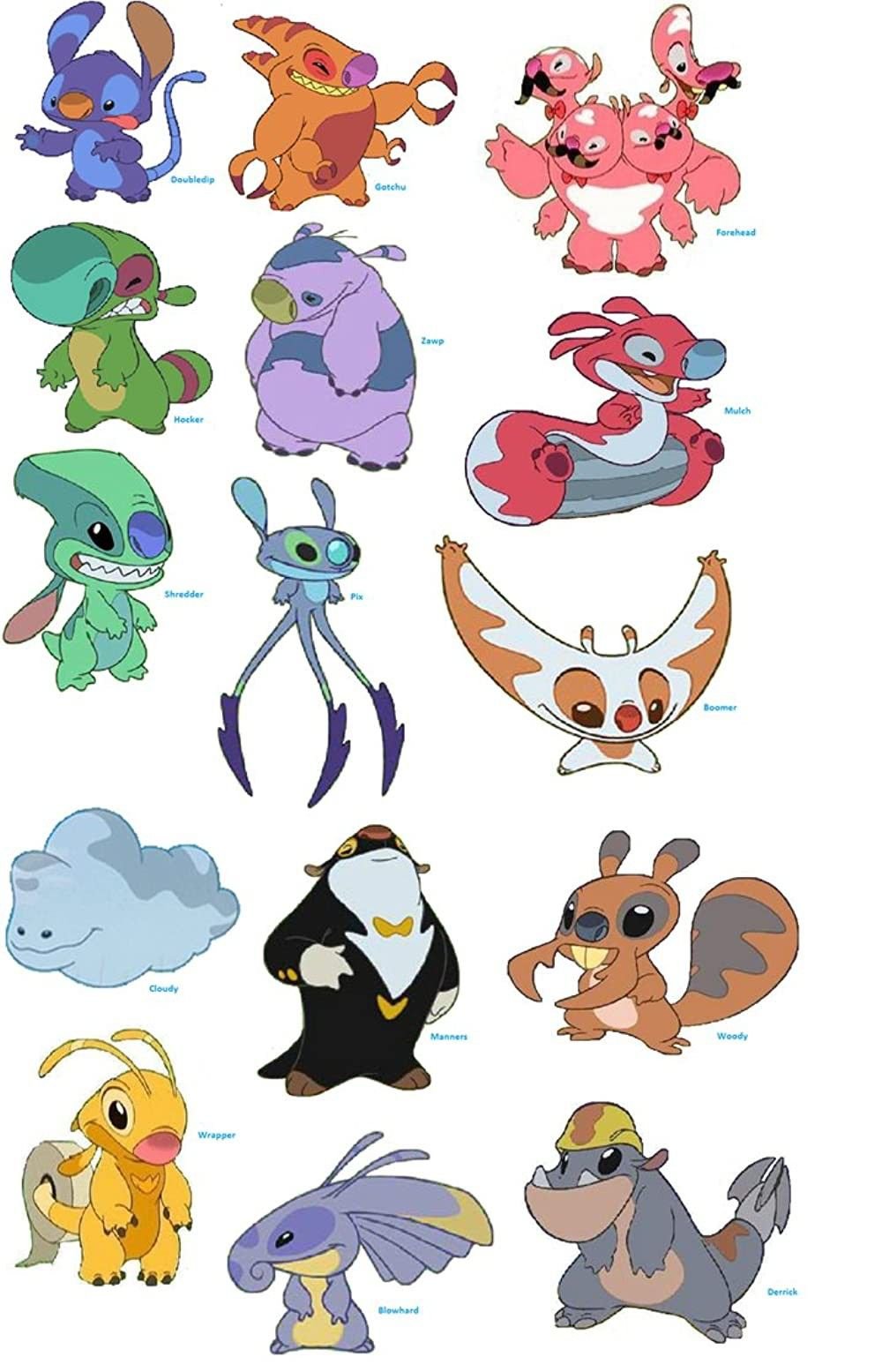
In the vast, verdant landscapes of Kauaʻi, a cosmic drama unfolded, not with invading armies, but with an accidental scattering of tiny, colorful pods. Each pod contained a marvel of genetic engineering, a creature designed for chaos but destined for belonging. We're talking, of course, about the "Experiments" from Disney's Lilo & Stitch universe—Dr. Jumba Jookiba's 626 (and beyond) unique creations, each a blend of destructive potential and surprising charm. Understanding these fascinating beings requires a system, a way of Classifying Lilo & Stitch Experiments that reveals their intended purpose and the genius (or madness) behind their design.
This isn't just about cataloging; it's about appreciating the intricate thought Jumba put into his "babies," and how Lilo and Stitch tirelessly worked to give them a second chance at being good. Prepare to dive deep into the science, the chaos, and the ʻohana that makes these creatures so beloved.
At a Glance: Decoding Jumba's Creations
- Who created them? Dr. Jumba Jookiba, funded by Dr. Jacques von Hämsterviel.
- What are they? Genetically engineered creatures, often called "Stitch's cousins."
- How do they start? As dehydrated pods, reactivated by water.
- The Mission: Lilo and Stitch find, name, and rehabilitate them to discover their "one true place."
- The Numbers: 626 original experiments. Numbers are pronounced individually (e.g., Six-Two-Six).
- The Series System: Experiments are categorized by their first digit (0-Series for household helpers, 6-Series for doomsday weapons, etc.), often reflected in their pod color.
- Key Traits: Unique powers, common abilities (wall-scaling), fail-safes, "crippling overspecialization," often named after their function.
The Architect of Anarchy: Dr. Jumba Jookiba's Vision
Imagine a brilliant, self-proclaimed "evil genius" with an insatiable desire to create the most destructive beings in the galaxy. That's Dr. Jumba Jookiba, the eccentric alien scientist responsible for every single experiment. Funded by his equally nefarious, pint-sized former partner, Dr. Jacques von Hämsterviel, Jumba poured his genius into designing creatures that could fulfill any malevolent task imaginable. From generating black holes to simply ruining a good party, no destructive niche was left unfilled.
These experiments weren't born fully formed into the world. They began as compact, marble-like dehydrated pods, each containing the dormant genetic code of a unique creature. These pods were accidentally scattered across Kauaʻi following the events of Stitch! The Movie, setting the stage for Lilo and Stitch's grand adventure. Their mission? To find all of Stitch's "cousins," reactivate them, and then help them turn their destructive talents towards more constructive, or at least less catastrophic, purposes. It's a testament to the power of ʻohana (family) that Stitch, an experiment himself, views these creatures as his extended family, despite Gantu's dismissive labels of "trogs" or "abominations."
Decoding the DNA: Core Biological Traits of Jumba's Experiments
Before we delve into the specific classifications, it's crucial to understand the fundamental biology and design principles that underpin all of Jumba's creations. These aren't just random monsters; they're meticulously engineered beings with shared characteristics and intentional flaws.
A Genetic Blueprint with Shared Abilities
While each experiment boasts a unique appearance and a signature destructive power, Jumba's reuse of genetic material means they share several common, impressive abilities. Most can effortlessly scale walls and ceilings, retract extra limbs or antennae, and possess incredible strength and agility far beyond their size. This shared baseline makes them consistently formidable, regardless of their primary function.
However, their powers aren't always universally effective. Some experiments, like the enchanting Angel (624), the memory-wiping Amnesio (303), or the programming-reverting Retro (210), possess the ability to temporarily or permanently influence other experiments, often turning them back to their original "evil" programming. It's a reminder that even within this engineered family, there are unique checks and balances.
The Pod-to-Creature Lifecycle
The most iconic trait is their lifecycle: from a dehydrated pod to a reactive, living creature upon contact with water. This clever design meant Jumba could store hundreds of his creations efficiently. The inverse process is far more challenging; the only known method to deactivate a living experiment back into its pod form is through a home food dehydrator—a rather mundane solution for such advanced beings.
Engineered for Chaos, Built with Fail-Safes
Jumba, in his twisted brilliance, rarely created something without a back-up plan. Many experiments were intentionally designed with a "fail-safe" or an inherent imperfection that could be exploited to stop them if they went rogue. Experiment 627, for instance, was made "too perfect" but had an overreactive humor that could be used against him. Even Leroy (629), Jumba's ultimate evil creation, could be temporarily paralyzed by hearing "Aloha ʻOe." These deliberate weaknesses highlight Jumba's strategic thinking, even when he aimed for pure destruction.
Crucially, the experiments' molecules must be fully charged upon creation. Any deficiency can lead to glitches, temporary reversions to their original destructive programming, or even a shortened lifespan. This detail underscores the precision required in their manufacture.
Language and Lore
Their native tongue, Tantalog, is a fascinating linguistic blend of Hawaiian, Chinese, and "Chezcreekian." And while their numbers are central to their identity, they're typically pronounced as individual digits, as in "Experiment Six-Two-Six" for Stitch, rather than "Six Hundred Twenty-Six." This attention to detail in their lore adds another layer to their complex identities.
The Master Classification System: Understanding Experiment Series
The true genius of Jumba's creations lies in their systematic categorization. By simply looking at an experiment's first digit, you can immediately gain insight into its intended purpose. This numbering scheme isn't arbitrary; it's a testament to Jumba's meticulous (and terrifying) planning. The colors of the experiment pods themselves often correspond to their series number, offering an instant visual cue.
Let's break down each series and what you can expect from its inhabitants.
0-Series: Test Batch & Household Helpers
These are Jumba's earliest creations, his "test batch." Before he truly refined his destructive capabilities, he experimented with more mundane, often domestic, applications. The 0-Series experiments were largely designed to be household helpers, proving that even an evil genius needs a clean lair or a good cup of coffee. Lilo's mission to find "mundane utility" for the experiments perfectly aligns with the original intent of many of these early creations. While they might still cause mischief, their primary design often leans towards practical (if exaggerated) home functions.
1-Series: Civic Disruptors
Stepping up from household chores, the 1-Series experiments were designed to cause general civic disturbances. Think minor annoyances escalated to community-wide chaos. These aren't usually doomsday weapons, but rather troublemakers intended to disrupt public order, create widespread inconvenience, or generally make life miserable for a populace. They specialize in turning a calm day into an uproar, making them perfect for low-level planetary subjugation.
2-Series: Tech & Science Manipulators
As Jumba's ambitions grew, so did his experiments' complexity. The 2-Series focuses on technological and scientific interference. These experiments are designed to sabotage advanced systems, manipulate scientific equipment, or exploit technological weaknesses. They could disable defense grids, corrupt data, or even turn a planet's own infrastructure against it. Their abilities often require a deeper understanding of galactic technology, making them some of Jumba's more cunning creations.
Interestingly, some experiments like Mr. Stenchy (254) are designed to be "ridiculously cute critters" that lull people into a false sense of security before unleashing their destructive functions. This adds a layer of deceptive charm to Jumba's technological terrors.
3-Series: Psychological Prowlers
Not all destruction needs to be physical. The 3-Series delves into the realm of psychological warfare. These experiments are engineered to manipulate minds, sow discord, induce fear, or cause confusion on a grand scale. Their targets are emotions, thoughts, and social cohesion. A 3-Series experiment could turn allies against each other, spread paranoia, or simply drive an entire population mad, proving that the mind can be as vulnerable as any fortress.
4-Series: The Secret Weapon Failures
This series is shrouded in more mystery, often described as Jumba's "top secret, militaristic, and mostly failed experiments." This implies a focus on advanced weaponry or direct combat applications, but with a high rate of unsuitability or unintended consequences. Perhaps they were too volatile, too uncontrollable, or simply didn't perform as expected. These represent Jumba's attempts at ultimate battlefield dominance that, for various reasons, didn't quite hit the mark. Their failures are as instructive as the successes of other series.
5-Series: Elemental & Environmental Agents
When it comes to altering planets directly, the 5-Series takes center stage. These experiments are masters of elemental manipulation and environmental disruption. They can control weather patterns, trigger natural disasters, affect gravity, or manipulate fundamental forces of nature. A single 5-Series experiment could turn a lush planet into a desert, freeze an ocean, or unleash devastating storms, making them incredibly potent tools for large-scale planetary conquest. They embody Jumba's desire to reshape worlds at his whim.
6-Series: Galactic Doomsdays & Prototypes
This is the apex of Jumba's destructive ambition. The 6-Series experiments are battlefield and doomsday creations with galactic implications. They are the most powerful, the most dangerous, and often the most iconic. Stitch himself, Experiment 626, is the crowning jewel of this series—designed as the ultimate killer monster, virtually indestructible, and capable of single-handedly laying waste to entire civilizations.
Within this series, you also find critical prototypes and evil counterparts. Zero (000), although numerically a 0-Series, is often referred to as the "psycho prototype" to Stitch—an earlier, even more uncontrollable version of the ultimate killer. Reuben (625) is a flawed prototype, a precursor to Stitch with similar abilities but a pronounced laziness. Later creations like Experiment 627 and the formidable Leroy (629) represent Jumba's continued efforts to refine the "Stitch-type" experiment, pushing the boundaries of engineered destruction. When you encounter a 6-Series experiment, you know you're dealing with a world-threatening force.
Beyond the Numbers: Naming, Purpose, and Personality
While the numerical classification provides a framework, each experiment is more than just a digit sequence. Their individual identities, often forged by Lilo, add layers of personality and purpose.
What's in a Name? Function, Often.
Most experiments are named after their primary function or a prominent characteristic. This straightforward approach helps Lilo and Stitch quickly understand what they're up against. For example, "Sparky" (221) generates electrical surges, "Richter" (513) creates earthquakes, and "Boomer" (602) produces sonic blasts. These names are often given by Lilo after they discover the experiment's specific ability, helping to define their "one true place."
The Burden of "Crippling Overspecialization"
A key design flaw (or feature, depending on Jumba's mood) is the experiments' "crippling overspecialization." They are typically made for one very specific purpose. This makes them incredibly effective at that one task but often ill-suited for much else. This overspecialization is precisely what Lilo targets with her "mundane utility" approach: how can an experiment designed to cause earthquakes be useful in a constructive way? Perhaps by drilling wells or breaking up rocks for construction, rather than destroying cities. This recontextualization is at the heart of their rehabilitation.
Single-Specimen Species (Mostly)
For the most part, each experiment is a "single-specimen species"—a unique genetic individual. However, there are notable exceptions. The "Stitch-type" experiments (000, 625, 626, 627, 629) are variations on a core design, exploring different facets of the "ultimate destroyer." These exceptions highlight Jumba's iterative design process, constantly refining his most potent creations.
You can delve deeper into the entire universe of Jumba's creations and their stories by exploring Lilo and Stitch experiments.
The "Monster of the Week" Mission: Finding Their True Place
For Lilo and Stitch, the discovery of each new experiment in Lilo & Stitch: The Series often follows a "Monster of the Week" format. A new pod reactivates, causing chaos, and our heroes must track it down, understand its power, and then "rehabilitate" it. This rehabilitation isn't about reprogramming them to be "good" in a generic sense; it's about helping them discover their "one true place" on Earth.
This "one true place" is a recurring theme. It means finding a constructive, non-destructive role where their specialized abilities can be used for good, or at least for harmless, whimsical purposes. A fire-starting experiment might become a marshmallow toaster, a sound-blasting one a megaphone, or a weather manipulator a rainmaker for thirsty crops. This philosophy transforms Jumba's instruments of destruction into beloved (if sometimes troublesome) members of the larger ʻohana.
Frequently Asked Questions About Experiment Classification
Even with a detailed classification system, questions often arise about these complex characters. Let's address some common ones.
Are all experiments inherently evil?
No. While Jumba designed most with destructive intentions, their "evil" is often a function of their programming or overspecialization. Once they learn compassion and find their "one true place," they demonstrate the capacity for loyalty, affection, and even heroism. Their default state is chaotic, but their potential for good is immense, especially under Lilo's guidance.
Are there truly only 626 original experiments?
Jumba created 626 original experiments. However, the saga extends beyond this number. Dr. Hämsterviel later creates Leroy (629) as an evil counterpart to Stitch, and other experiments, like 627, were created after the initial 626. The 626 count refers to Jumba's first complete batch, as listed in the credits of Leroy & Stitch. As of 2019, 125 experiments have officially appeared with confirmed names, numbers, and abilities in various media.
Can experiments really "change" their core programming?
While experiments can revert to their original evil programming (especially under the influence of others like Angel), their experiences with Lilo and Stitch teach them empathy and purpose. It's less about rewriting their core genetic code and more about guiding their inherent abilities toward positive outcomes. They learn to choose good, even if their instincts lean towards mischief.
What makes a "Stitch-type" experiment unique?
"Stitch-type" experiments (like Zero (000), Reuben (625), Stitch (626), 627, and Leroy (629)) are distinct because they represent Jumba's focused efforts to create the ultimate, nearly indestructible, multi-purpose super-soldiers. They often share a similar body plan, enhanced strength, and numerous retractable features. Each is a refinement or variation on Jumba's core concept of a perfect destroyer, making them among his most powerful and dangerous creations.
How do you re-deactivate an experiment once it's active?
The only confirmed method is using a home food dehydrator. This mundane appliance provides a surprising (and often humorous) contrast to the advanced alien technology that created them. It effectively reverses the hydration process that activates the pod.
Embracing the Chaos: The Enduring Legacy of Jumba's Creations
Classifying Lilo & Stitch Experiments isn't merely an academic exercise; it's a journey into the heart of what makes this universe so rich and enduring. From the humble household helpers of the 0-Series to the planet-shattering might of the 6-Series, each experiment tells a story of creation, purpose, and ultimately, belonging. They are artificial family members, a "badass family" with unique powers, born of a mad scientist's ambition but redeemed by a little girl's love and a blue alien's sense of ʻohana.
Their saga reminds us that even the most destructive forces can find a peaceful purpose, and that true family often comes in the most unexpected, and often extraterrestrial, forms. So the next time you see a mischievous little creature wreaking havoc, remember Jumba's classification system—and perhaps consider what "one true place" it might discover with a little aloha.