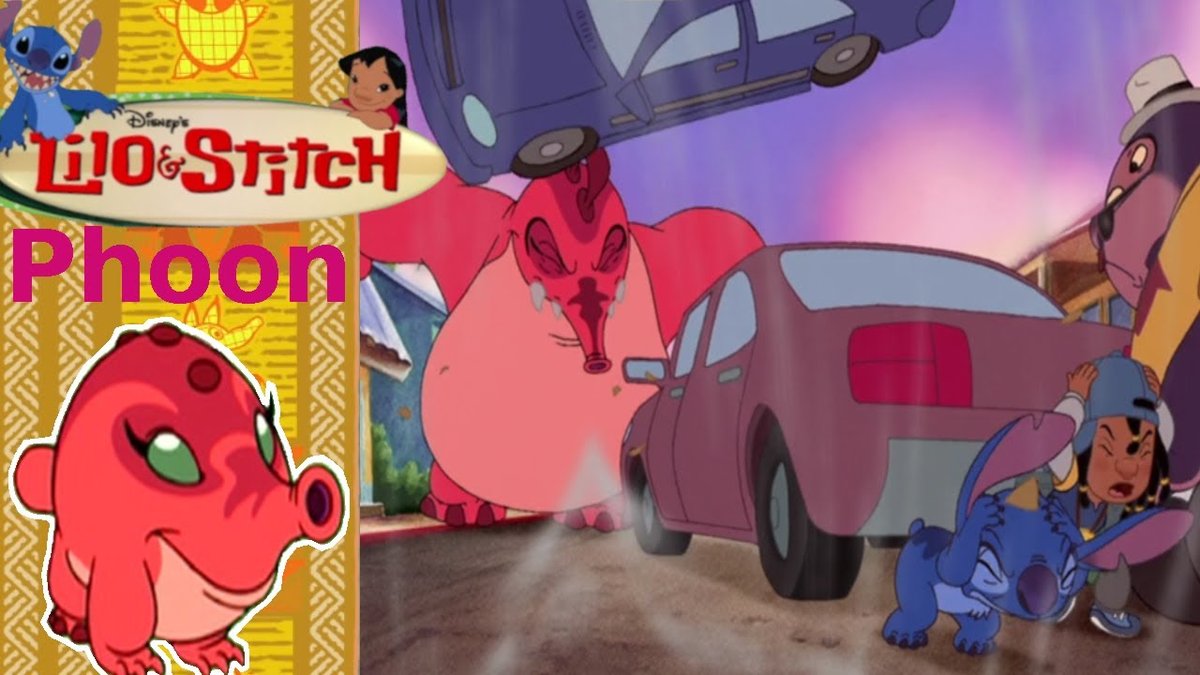
The magic of Lilo & Stitch doesn't just lie in its vibrant Hawaiian setting or its groundbreaking blend of sci-fi and heartfelt family drama; it thrives in the quiet corners of its lore, sparking a universe of Lilo & Stitch Experiment Fan Theories & Lore that fans eagerly unpack. From the hidden traumas shaping Lilo's quirky habits to the subtle hints about the true nature of its beloved characters, this film and its expansive universe are ripe for speculation.
When you peel back the layers of this 2002 Disney classic, you find a rich tapestry woven with mysterious experiments, deeply personal tragedy, and even government conspiracies. It's this depth that keeps viewers coming back, scrutinizing every frame and line of dialogue for new meanings and connections.
At a Glance: Unpacking the Lore
- Deep Dive into Characters: Fan theories often explore the hidden backstories and true motivations of beloved characters like Nani, Lilo, Bubbles, and Jumba.
- Grief and Coping Mechanisms: Many theories link Lilo's unique behaviors, like feeding Pudge the fish or her photography hobby, to the trauma of losing her parents.
- Benevolent "Evil": Jumba Jookiba's nature is often debated, with theories suggesting his "evil genius" persona is more performance than inherent malice.
- Unsung Heroes & Secret Agents: Characters like Cobra Bubbles are theorized to have far more significant, secret roles in the galactic community.
- The Expansive Experiment Catalog: Beyond the main cast, a vast number of experiments remain "unconfirmed," appearing visually or being hinted at without full canonical details.
- Understanding "Unconfirmed": These are experiments whose names, numbers, or functions haven't been officially established, adding a layer of mystery to the franchise's rich creature design.
The Enduring 'Ohana: Why Fans Dive Deep into Lore
What makes a film nearly two decades old continue to inspire such vibrant discussion and theorizing? For Lilo & Stitch, it’s a potent cocktail of unique storytelling, rich emotional undertones, and a surprisingly complex sci-fi backdrop. Unlike many Disney films, it grapples openly with grief, abandonment, and the profound meaning of family—or 'ohana, as the film teaches us. This emotional resonance encourages viewers to not just watch, but to feel and interpret, seeking deeper meaning in every detail, much like Lilo herself tries to understand the world around her.
This pursuit of hidden meaning extends to every nook and cranny of the franchise, including the vast catalog of Jumba's creations. If you're looking to understand the full scope, you might want to Explore the Lilo & Stitch experiments in detail.
Decoding the Unspoken: Fan Theories That Just Might Be True
The most compelling fan theories don't invent new plotlines; they build upon existing clues, connecting the dots in ways that enhance the original narrative. Here are some of the most popular and persuasive Lilo & Stitch fan theories floating around the internet, often sparked by keen-eyed Redditors.
Nani's Sacrificed Surfing Dream
Look closely above Nani's bed, and you'll spot glimmering gold medals. While the film explicitly shows Nani struggling to keep her job and raise Lilo, these medals hint at a past life. The theory suggests Nani wasn't just good at surfing; she was an aspiring professional. Her parents' untimely death didn't just burden her with Lilo's care, it forced her to abandon a promising career, sacrificing her personal dreams for her sister's well-being. This theory adds another layer of heartbreaking selflessness to a character already overflowing with it, making her struggles even more poignant.
Lilo's Pudge Ritual: A Response to Grief
Perhaps one of the most widely accepted fan theories concerns Lilo's unusual ritual of feeding Pudge the fish a peanut butter sandwich. Lilo staunchly believes Pudge controls the weather and must be appeased to prevent storms. This quirky habit, Redditors suggest, isn't just a child's imagination. It's a coping mechanism born from profound trauma. Lilo's parents, the theory posits, died in a car accident during an intense thunderstorm. Unable to process the random cruelty of nature, Lilo created a ritual to assert control, however symbolic, over the forces that took her family. Feeding Pudge becomes her desperate, innocent attempt to prevent future tragedies.
Bubbles: The Quiet Alien Protector
Cobra Bubbles, the social worker, is a character shrouded in quiet mystery. He's unusually calm, incredibly observant, and possesses an almost encyclopedic knowledge of things he shouldn't. The film reveals he "used to work for the CIA" and once claimed mosquitoes were an "endangered species" to justify something. The theory proposes Bubbles isn't just an ex-CIA agent; he's had extensive dealings with aliens, possibly even working for them or for a clandestine Earth agency that monitors extraterrestrial activity. His "mosquitoes" story was a clever cover-up to protect Earth from unwanted alien attention, perhaps after he successfully captured and returned a wanted individual for the alien council. This theory casts Gantu's often-frustrated role in a new light, suggesting Earth had its own, more competent, protectors all along.
Jumba's Benevolent Genius: A Misunderstood Villain
Jumba Jookiba is introduced as an "evil genius" banished for creating illegal genetic experiments, including Stitch's species. Yet, throughout the series, his creations consistently achieve good outcomes, or at least have the potential for good. He's portrayed as clumsy, somewhat endearing, and often more interested in the process of creation than true destruction. This theory suggests Jumba isn't truly evil; he merely attempts to follow the path of his ancestors, a lineage of notorious evil geniuses. He’s driven by a need to fulfill this legacy, but his inherent nature pushes his creations towards constructive, rather than destructive, ends. His "evil" is more performative, a genetic predisposition he can't quite shake, but never fully embodies. You can see this duality play out in many of Jumba's creations.
Lilo's Lens on Loss: Photography as Coping
Lilo's passion for photography is another unique trait. She constantly snaps pictures of tourists, even when they're confused or annoyed. The fan theory connects this directly to her profound fear of loss. Having experienced the sudden, irreversible disappearance of her parents, Lilo struggles with the impermanence of people. By photographing tourists—temporary visitors—she creates a tangible record, a memory, of those who are fleetingly in her life. It’s her way of holding onto people, of denying the finality of "gone forever," even if they're just strangers passing through.
Lilo's Future: An Intergalactic HR Visionary
The Lilo & Stitch television series significantly expands the universe, introducing hundreds of Jumba's other experiments, each with a unique, often destructive, primary function. Lilo, with Stitch's help, takes on the monumental task of rehabilitating these experiments and finding them a "place where they belong" – a job where their unique abilities can be used for good. This Redditor theory proposes that Lilo, as an adult, would establish an intergalactic employment agency. Her demonstrated skill in matching alien experiments with suitable, meaningful work perfectly positions her to help both humans and aliens find their purpose, showcasing her enduring commitment to 'ohana on a galactic scale.
Beyond the Canon: The World of Unconfirmed Experiments
While fan theories delve into character motivations, another fascinating aspect of Lilo & Stitch lore lies in the vast, often ambiguous, catalog of experiments. Not every creation of Jumba's genius received a dedicated episode or a confirmed name and number.
What Are Unconfirmed Experiments?
Simply put, unconfirmed experiments are creations of Jumba whose names, numbers, and specific functions have not been officially validated by a canonical source (like the original films, the series episode guide, or official Disney publications). They exist in a liminal space, sparking curiosity among dedicated fans.
Some experiments are "partially confirmed," meaning their names, numbers, and images are known, but their full functions remain a mystery. Examples include Slobber, Hisee, and Tippy. They're like tantalizing clues in a larger puzzle, hinting at stories yet untold.
Where Do They Appear?
You might spot these elusive experiments in various corners of the Lilo & Stitch universe:
- Leroy & Stitch: This film is a treasure trove of background experiments, often appearing in crowd scenes or mass gatherings.
- Stitch!: The Japanese anime series also features many experiments, some of which fall into the "unconfirmed" category.
- Comic Zone Volume 1: Disney's Lilo & Stitch: Promotional materials and comic books sometimes introduced designs that were never fully fleshed out in the animated canon.
- Other Promotional Materials: Various merchandise, games, and art have featured designs that, while clearly Jumba's handiwork, lack official backstories.
Visual Clues & Curious Forms
One of the joys of spotting unconfirmed experiments is their sheer diversity. They showcase Jumba's boundless (and sometimes bizarre) creativity. You might see:
- Pop Culture Nods: Experiments resembling iconic characters like Woody from Toy Story or Link from The Legend of Zelda.
- Animal Kingdom Reimagined: Designs inspired by an Ankylosaurus, hippopotamus, meerkat, warthog, or even a grasshopper.
- Varied Anatomy: Some sport multiple limbs, antennae, or peculiar body shapes, ranging from blob-like or potato-like forms to bipedal creatures with pincers. Their colors are as diverse as their forms, from vibrant greens to subtle yellows.
Many of these, particularly those in Leroy & Stitch, were likely intended as background fillers, designed to flesh out the massive number of experiments without necessarily needing a full character arc. Interestingly, many also bear visual similarities to already confirmed experiments, perhaps suggesting variations on a theme or early design concepts.
Functions Without Faces: The Mystery of Unassigned Abilities
Even when an experiment isn't fully confirmed, sometimes their functions are hinted at. We've heard mentions of:
- Ham Maker: Pleakley's unique characteristics often lead to unusual observations, and he once mentioned an experiment designed to turn things into ham. Who was it? We don't know!
- Sink Clogger: Reuben, Experiment 625, once boasted about an experiment specifically created to clog sinks. A nuisance, perhaps, but its number and name remain unknown.
- "Zzz" Sound Maker: Gantu described an experiment with two horns that made a distinctive "zzz" sound. Another mystery for the experiment hunters.
These snippets of information add to the intrigue, suggesting a vast, unseen world of Jumba's inventions that extends far beyond the ones Lilo and Stitch captured.
The 'Why' Behind the Unconfirmed: Background Fillers & Arbitrary Designs
Why so many unconfirmed experiments? Franchise writer Jess Winfield shed some light on this. He indicated that certain designs previously associated with specific numbers in apps or supplementary materials (like Experiment 015, Ruggles, or Experiment 023, Cyclo) were not, in fact, Jumba's canonical creations. This suggests that some designs and numbers appearing in non-primary sources were arbitrarily assigned or created for specific merchandise, rather than being part of the core story bible. Other such associated numbers included 016 (Malt) and 027 (Plushie).
In the sprawling group photo from Leroy & Stitch, only two unconfirmed experiments are distinctly identifiable: a Yellow 507-like experiment and a green Ankylosaurus-like experiment. This highlights how most unconfirmed experiments are meant to be background elements, adding visual richness without requiring detailed lore.
Separating Fact from Fan-Fiction: A Critical Lens
It's important to distinguish between official canon and compelling fan theories. While both enrich the viewing experience, they serve different purposes. Canon is the established truth of the story, while fan theories offer alternative interpretations or fill in perceived gaps.
How to Evaluate a Theory
When you encounter a new Lilo & Stitch theory, consider these points:
- Evidence: Does the theory rely on concrete visual cues, dialogue, or established character traits? The strongest theories, like Nani's medals or Lilo's Pudge ritual, are backed by specific details from the film.
- Plausibility: Does it fit seamlessly within the existing narrative and character psychology? Does it contradict any established facts?
- Enhancement: Does the theory deepen your appreciation for the story or characters? Does it make you want to rewatch the film with new eyes?
- Authorial Intent vs. Viewer Interpretation: Remember that while a theory might make perfect sense to you, it may not have been the original creators' intent. Both are valid forms of engagement!
The Joy of Headcanon vs. Canon
"Headcanon" refers to elements or interpretations that fans personally believe to be true within a fictional universe, even if they aren't officially confirmed. The world of Lilo & Stitch is particularly conducive to headcanon due to its emotional depth and subtle world-building. Embracing fan theories as headcanon allows you to personalize your viewing experience, finding additional layers of meaning and connection with the beloved characters of Lilo & Stitch. There's no harm in loving a theory, even if it's never officially confirmed.
Your Turn: Engaging with the Lilo & Stitch Lore
The enduring appeal of Lilo & Stitch lies not just in its animation or its heartwarming story, but in its ability to spark imagination and encourage deeper thought. Whether you're re-watching the original film, diving into the animated series, or exploring comics and games, keep an eye out for these subtle clues and hidden details.
Next time you see Lilo offer Pudge a sandwich, or notice the medals above Nani's bed, you'll be armed with a richer understanding of the potential depth beneath the surface. Discuss these theories with friends, challenge them, or even come up with your own! The world of Lilo & Stitch is vast and full of wonder, inviting you to connect with its 'ohana in ways you might never have imagined.